How Venue Surfaces Reshape Market Movements in Outdoor Team Events
Written by Anna Lange · Aug 19, 2026
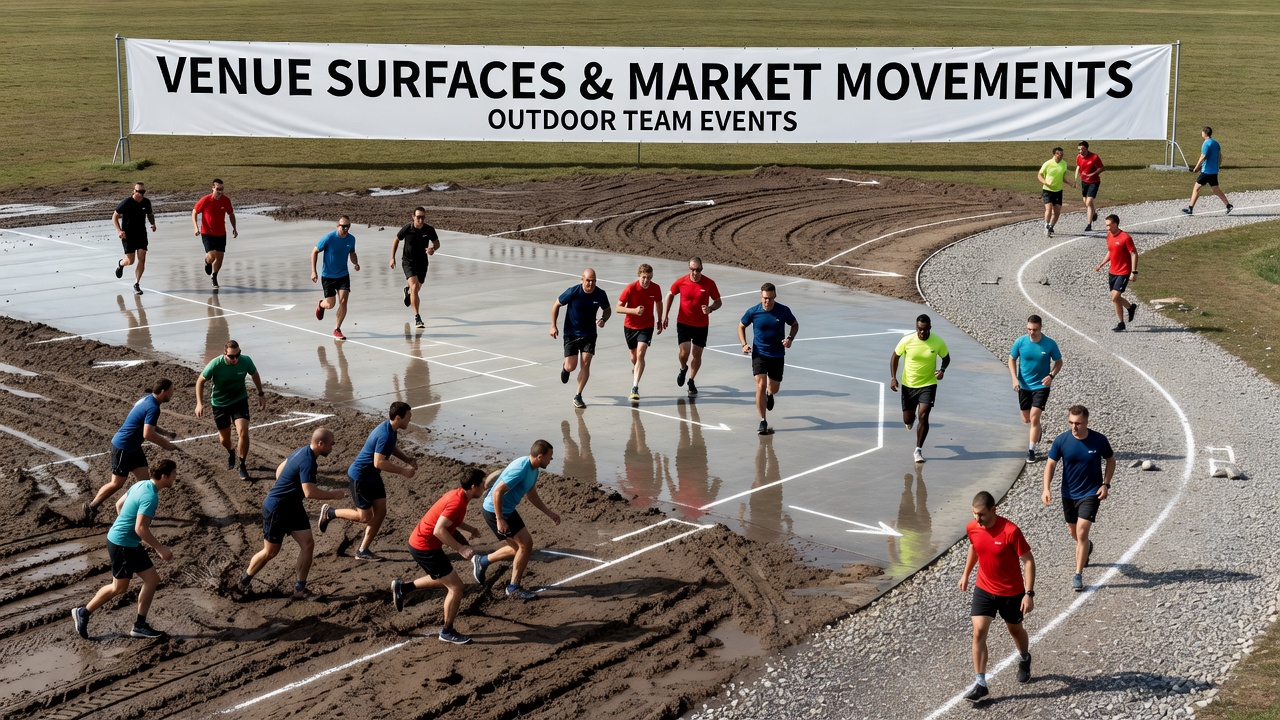
How Venue Surfaces Reshape Market Movements in Outdoor Team Events
Observers note that venue surfaces play a direct role in altering performance metrics across outdoor team sports, which in turn drives shifts in betting market prices. Data from multiple competitions shows that pitch conditions, turf composition, and ground hardness change the pace of play, scoring rates, and injury risks, prompting real-time adjustments in odds offered by operators. In football matches played on natural grass versus artificial turf, researchers have documented measurable differences in ball roll speed and player acceleration patterns. Studies tracking European leagues indicate that teams accustomed to slower grass surfaces often see their expected goal totals revised downward when fixtures move to faster artificial pitches, creating measurable drifts in over/under markets during the August 2026 pre-season window. Cricket provides another clear example where wicket and outfield conditions dictate run rates and wicket fall probabilities. Grounds with drier, cracked surfaces tend to produce higher bounce and turn, leading analysts to recalibrate session totals and player performance lines. Figures from recent international series reveal that these adjustments occur within the first few overs, as bookmakers incorporate updated data feeds into live pricing models.Grass Length and Soil Composition Effects
Groundskeepers maintain specific grass heights that directly affect how the ball travels across the surface, and market participants monitor these variables closely. Shorter grass on football pitches allows quicker transitions and more accurate passes, which data shows correlates with elevated expected goals for attacking sides. Longer grass slows the ball and increases physical demands, prompting bookmakers to shade totals markets accordingly.
Soil moisture levels further compound these dynamics, especially in regions where rainfall patterns vary seasonally. When grounds retain higher water content, surfaces become heavier and favor teams with stronger defensive structures, while drier conditions reward sides built around speed and width. Observers tracking August 2026 fixtures across multiple continents report that these factors trigger early line movements in both pre-match and in-play betting environments.
Impact on Live Odds and Accumulator Chains
Live market movements accelerate when surfaces interact with weather changes during matches. A sudden drying outfield in cricket can shift powerplay run rates upward, forcing rapid recalibration of accumulator legs that include over totals. Basketball played on outdoor courts experiences similar effects from temperature-driven surface expansion, although team events in this category remain less common than indoor equivalents.

Researchers at the Australian Institute of Sport have examined how surface friction influences player movement efficiency in team sports, with findings indicating that traction variations produce measurable differences in sprint distances covered. These performance shifts feed directly into algorithmic pricing systems used by operators, resulting in odds adjustments that reflect updated probability distributions.
Regional Variations and Market Responses
European venues often feature hybrid grass systems designed for durability, while Australian and South African grounds emphasize natural grass suited to local climates. Each approach produces distinct playing characteristics that market makers incorporate when setting initial lines. A study published in the Journal of Sports Sciences documented how these regional differences lead to systematic biases in early betting markets until sufficient match data corrects the pricing.
Team managers adapt tactics to surface conditions, and these adjustments appear in real-time data streams that influence accumulator chains. Substitutions favoring players with better grip profiles on slick surfaces occur more frequently on certain venues, and analysts note corresponding movements in player prop markets during the middle stages of matches.
Conclusion
Venue surfaces continue to serve as a primary driver of performance variance in outdoor team events, with data consistently showing their influence on scoring patterns, injury rates, and tactical decisions. Market movements reflect these underlying physical factors through ongoing updates to odds across pre-match and live environments. As measurement technologies improve, the connection between surface characteristics and pricing accuracy becomes more precise, allowing participants to observe direct correlations between ground conditions and market behavior throughout the 2026 season and beyond.