Unveiling Patterns in Odds Volatility Caused by Late Roster Changes in Basketball and Cricket During International Tours
Written by Alex Beck · Aug 12, 2026
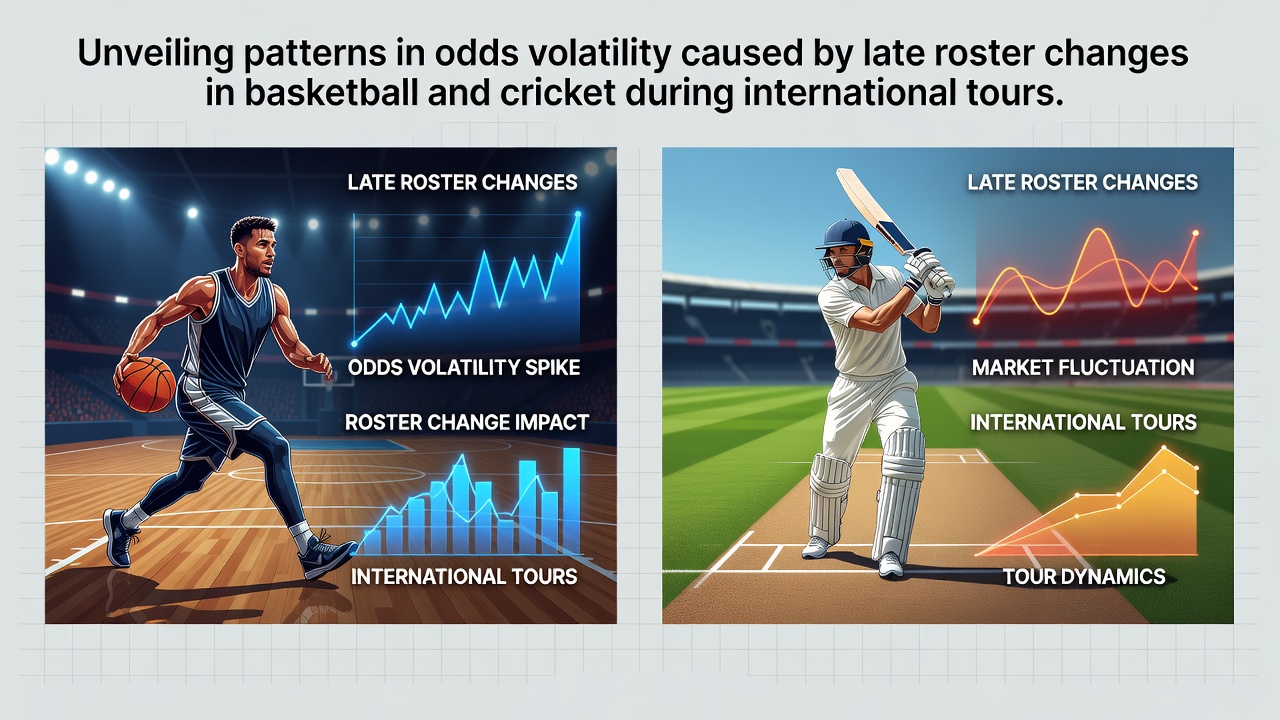
Unveiling Patterns in Odds Volatility Caused by Late Roster Changes in Basketball and Cricket During International Tours
International tours in basketball and cricket often feature last-minute roster adjustments that trigger measurable shifts in betting markets, and data collected across multiple events reveals consistent volatility patterns tied to player availability announcements. These changes occur when teams finalize lineups close to match times because of injuries, visa issues, or tactical decisions, and betting platforms adjust lines in real time as new information reaches the market. Observers note that volatility spikes typically begin within minutes of official roster releases and continue through the opening stages of play, creating distinct price movements compared to matches with stable lineups confirmed days in advance.
Late Roster Adjustments in Basketball Tours
Basketball tours organized under FIBA schedules frequently experience roster flux because national teams rely on players from professional leagues whose club commitments can shift unexpectedly. When a starting guard or forward withdraws hours before tip-off, markets for point spreads and player props move sharply, with totals often widening by several points within the first trading window. Research published by the Gambling Research Exchange Ontario indicates that such announcements correlate with increased trading volume across European and Asian betting exchanges, particularly during August windows when multiple qualifying tournaments overlap. Teams traveling across time zones during these tours face additional constraints from flight delays and medical evaluations, which compound the timing pressure on roster finalization and amplify the resulting odds swings.
Cricket Roster Dynamics During Overseas Tours
Cricket squads on multi-week international tours encounter similar pressures when bowlers or top-order batters are ruled out after initial squad announcements. Limited-overs formats prove especially sensitive because replacement players alter powerplay strategies and death-over options, prompting immediate recalibration of over/under markets and individual performance lines. Data compiled during the 2026 England and Australia series showed that volatility in session betting markets rose by an average of 18 percent following late changes compared to unchanged lineups. These adjustments frequently coincide with pitch report updates released on match day, creating layered information shocks that betting algorithms process through successive price revisions.
Common Volatility Patterns Across Both Sports
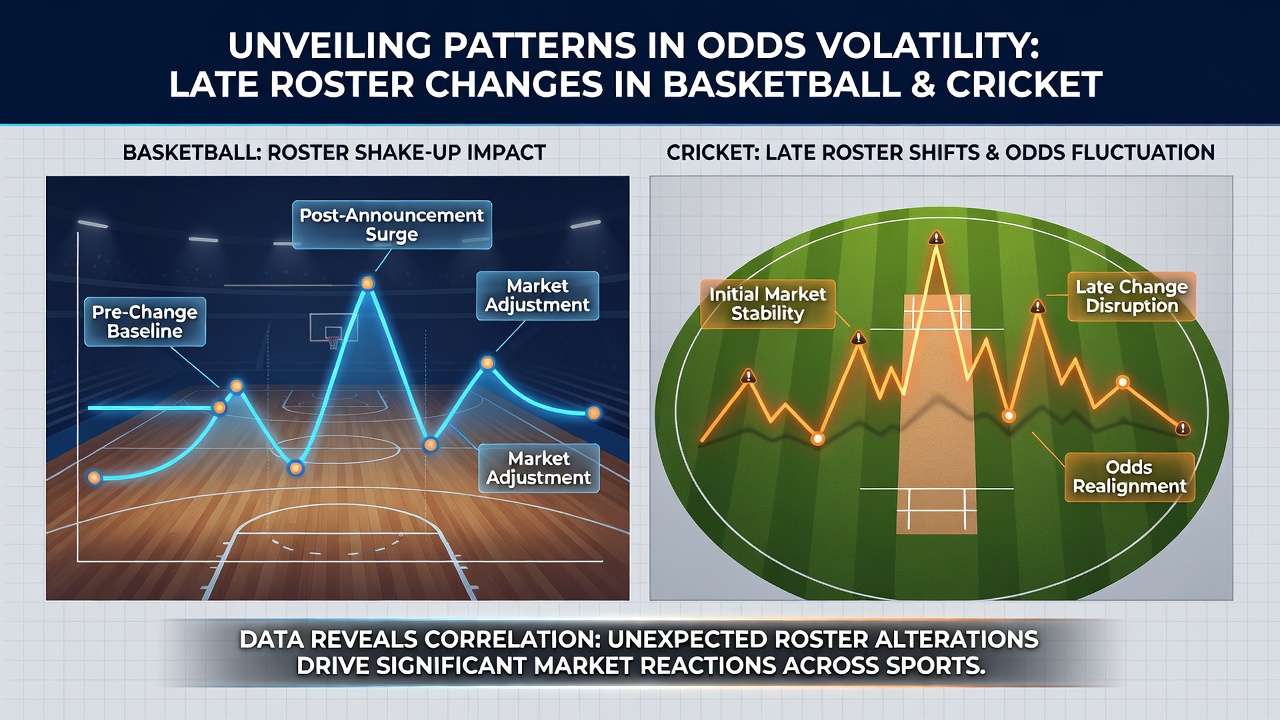
Analysts tracking both sports during overlapping August 2026 tours identified recurring sequences where initial odds movements favor the team announcing the more stable roster, followed by partial corrections once markets incorporate team responses and historical performance data for replacements. In basketball, guard absences tend to inflate opponent totals more than forward changes, whereas in cricket the loss of a primary spinner often widens runs-per-over lines in the middle overs. Cross-sport comparisons reveal that basketball markets stabilize faster, typically within 45 minutes, while cricket session markets continue adjusting through the first powerplay because fielding restrictions interact directly with the revised bowling attack. These patterns hold across venues in different continents, suggesting the timing of announcements relative to market close exerts stronger influence than venue-specific factors alone.
Data Sources and Measurement Approaches
Researchers at the University of Sydney's sports analytics group have examined timestamped odds feeds from multiple operators to quantify the duration and magnitude of volatility windows triggered by roster news. Their methodology isolates announcement moments through official team channels and measures subsequent price dispersion across spread, total, and player-specific contracts. Findings indicate that cricket markets exhibit longer tails of elevated volatility, extending up to the first drinks break, while basketball volatility clusters tightly around tip-off. Both datasets confirm that replacement players with limited prior international exposure generate wider bid-ask spreads than seasoned substitutes, reflecting greater uncertainty among market participants.
Conclusion
Patterns emerging from August 2026 international tours demonstrate that late roster changes produce predictable volatility signatures in basketball and cricket betting markets, with timing, player role, and sport-specific rules shaping the scale and duration of price movements. Continued collection of timestamped data across future tours will allow further refinement of these models as teams and operators adapt their information protocols.